Legal compliance in tenders
Law No. 8,159/1991 and e-ARQ Brasil require public agencies to keep a Classification Plan and a Retention Schedule. 1Doc now meets this within the platform itself.
Case 02 · 1Doc
How we brought 1Doc to cover the full lifecycle of public records, from the retention schedule to final disposition, turning complex archival regulations into a clear digital flow for government agencies.
1Doc already offered part of a records management toolset through its Classification Plan, linked to each subject. However, the platform did not yet support the retention and disposition workflow, a functional gap compared with competitors in the market.
This opened an opportunity to evolve the product, extending support for the lifecycle of public records and meeting agencies’ needs around classification, retention periods and final disposition.
The market also showed how big the gap was. We mapped public records management (GED) tenders that 1Doc couldn’t bid on because it didn’t meet the tender requirements.
A potential market the product is missing today.
Until now, 1Doc kept every single process issued on the platform, with no way to handle records disposition, something oversight bodies require. The Classification Plan existed, but classified documents followed no lifecycle: there were no retention periods, no appraisal and no disposal.
In practice, municipalities couldn’t carry out proper records management, and every document was stored indefinitely.
We started with a CSD matrix (Certainties, Suppositions and Doubts) to surface the rules and open questions around records disposition in the public sector: which laws apply, who approves disposal, and what has to happen before a document can be destroyed.
We mapped competitors’ features to understand how the market handled records retention, which steps made up their workflows and which capabilities could inspire 1Doc’s evolution.
We mapped the entire workflow of SEI (the Brazilian federal government’s electronic records system) to make sure 1Doc would offer, at a minimum, what this free federal software already gives municipalities.
We researched and structured the rules the federal government requires for records disposition, understanding each step, condition, dependency and edge case. The goal was to turn a complex process governed by archival regulations into clear requirements for a digital solution tailored to the platform’s module- and issuance-based model.
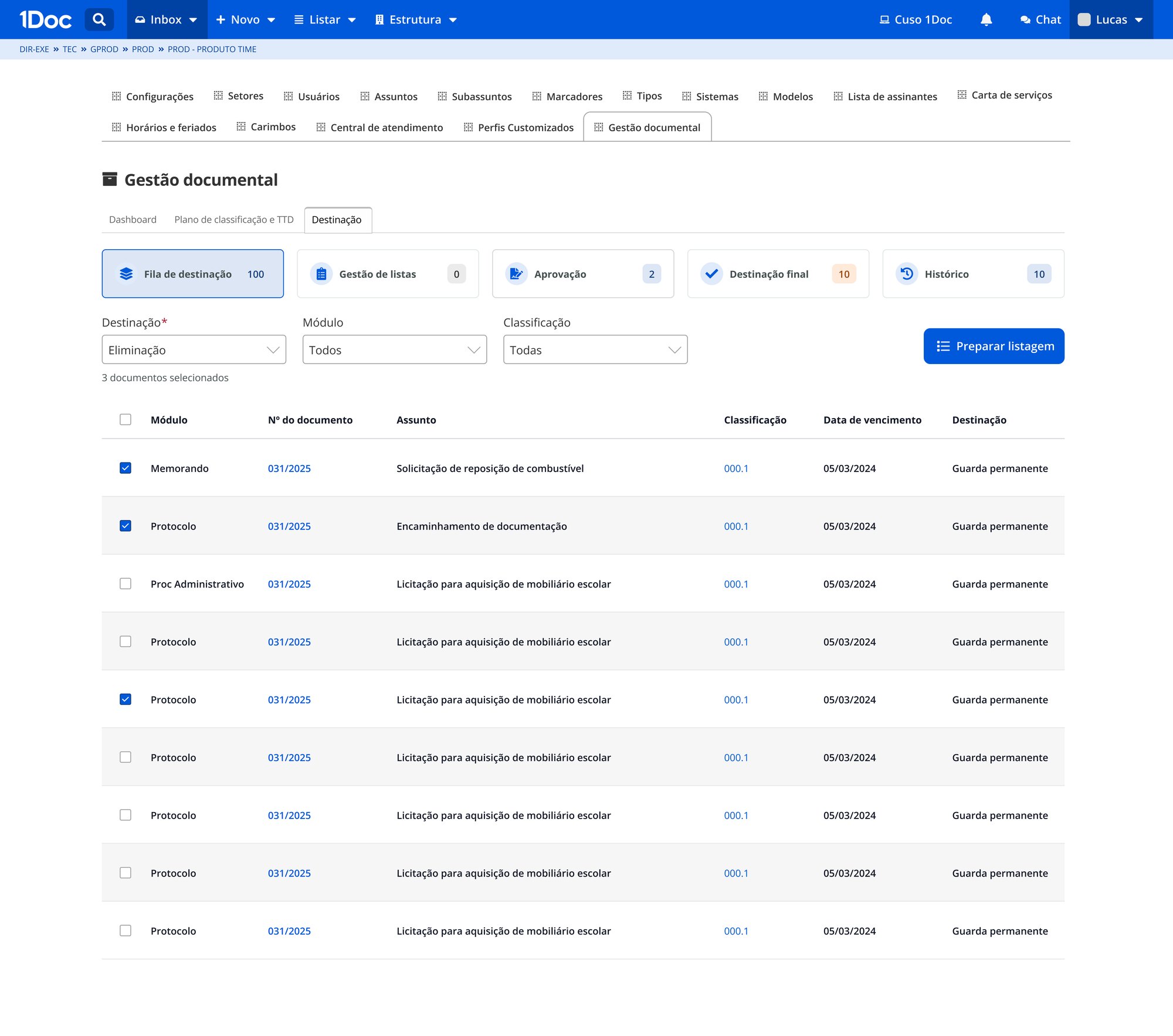
The design built on 1Doc’s legacy interface. That decision was driven by the complexity of the business rules and the urgency of the launch, since the platform redesign is still under way. The proposal covers the main stages of the records retention lifecycle, from setting retention periods to final disposition.
Using a working prototype built with the help of Claude, we validated the flow with a 1Doc sales analyst who holds a degree in archival science, to confirm that every archival rule was met.
We also ran 4 interviews with 1Doc customers: admin users who sit on their municipality’s CPAD (Permanent Document Appraisal Committee). The flow was validated with strong approval.
The delivery brings 1Doc closer to legal requirements and the SIGAD model, and sets it apart from tools that only classify.
Law No. 8,159/1991 and e-ARQ Brasil require public agencies to keep a Classification Plan and a Retention Schedule. 1Doc now meets this within the platform itself.
The platform used to only classify. Now it calculates due dates, builds the queue of what needs appraisal and organizes the lists, moving closer to archival management guidelines.
Players without a Retention Schedule or automatic search for expired items fall behind. Less manual work, stronger legal compliance and a strong differentiator in the public sector.
| Feature | 1Doc | SEI | Aprova | FlowDocs | SOGOV | Cidade360 |
|---|---|---|---|---|---|---|
| Classification Plan | ✓ | ✓ | ✓ | ✕ | ✕ | ✕ |
| Visual classification management at issuance | ✓ | ✓ | ✓ | ✕ | ✕ | ✕ |
| Search by classification | ✓ | ✓ | ✕ | ✕ | ✕ | ✕ |
| Retention management | ✓ | ✓ | ✕ | ✕ | ✕ | ✕ |
| Lifecycle phases: active to permanent retention | ✓ | ✓ | ✕ | ✕ | ✕ | ✕ |
| Creates disposal lists | ✓ | ✓ | ✕ | ✕ | ✕ | ✕ |
| Two-factor approval for disposal | ✓ | ✕ | ✕ | ✕ | ✕ | ✕ |
| Official gazette integration | ✓ | ✕ | ✕ | ✕ | ✕ | ✕ |
| Official act generation | ✓ | ✕ | ✕ | ✕ | ✕ | ✕ |
| Record of disposed documents | ✓ | ✓ | ✕ | ✕ | ✕ | ✕ |
| List history | ✓ | ✓ | ✕ | ✕ | ✕ | ✕ |
| User hierarchy | ✓ | ✓ | ✕ | ✕ | ✕ | ✕ |
In the first month with the new feature, 1Doc closed a contract with Juazeiro City Hall.